
Your Garage Door Shouldn't Sound Like That
You press the button, and instead of a smooth, quiet operation, your garage door greets you with a symphony of grinding, squealing, or banging. If you're a homeowner in Grapevine, you've probably experienced this at least once — especially during temperature swings when metal components expand and contract with the Texas heat.
The good news is that most garage door noises aren't random. Each sound typically points to a specific issue, and understanding what your door is telling you can help you decide whether it's a quick DIY fix or something that requires a professional technician.
Grinding or Scraping Sounds
A grinding noise is one of the most common complaints we hear from homeowners. This harsh, metallic sound usually indicates one of a few problems:
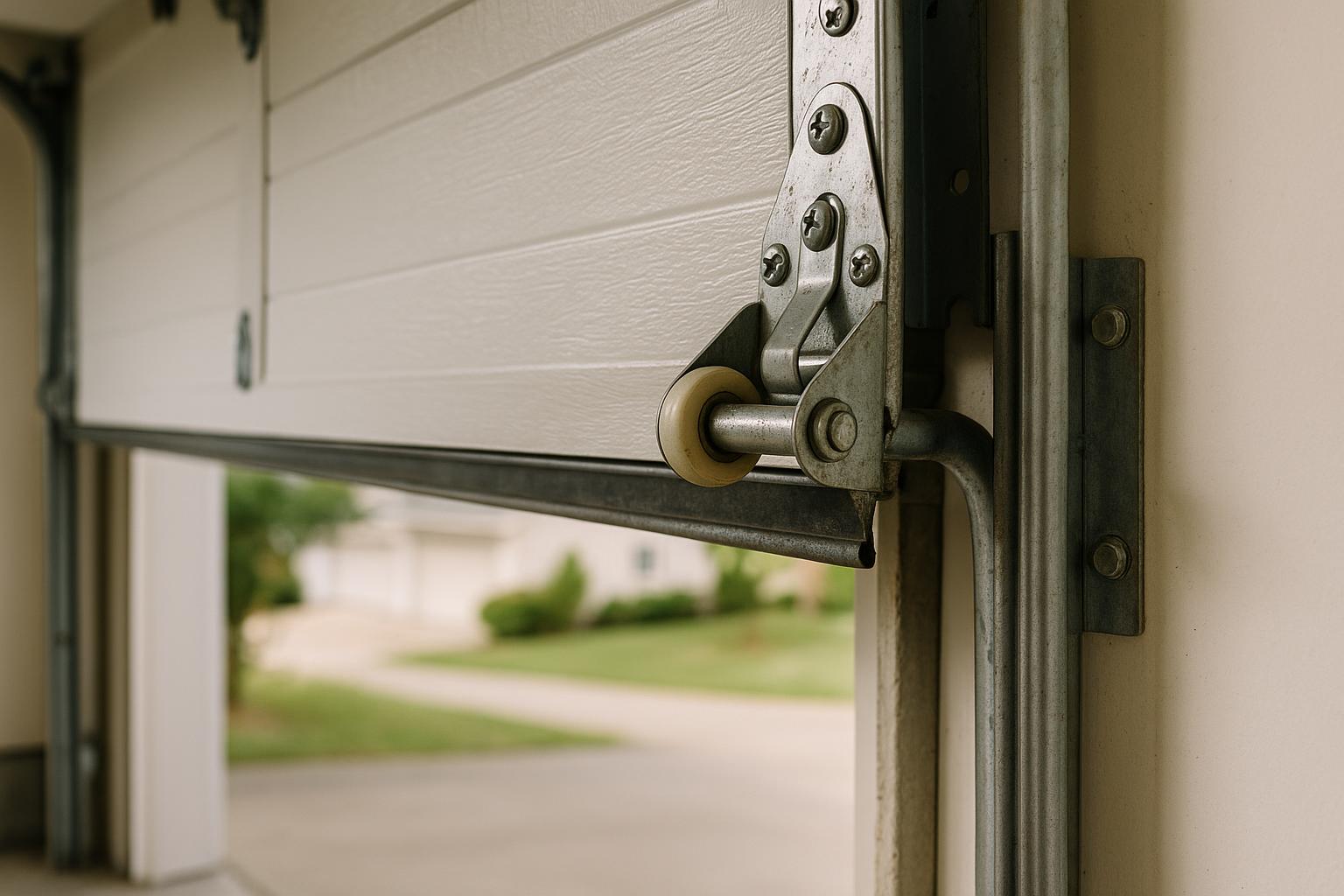
- Worn rollers: Steel rollers deteriorate over time, and as they lose their smooth surface, they grind against the track. Nylon rollers are quieter and last longer, making them a popular upgrade for homeowners who want a quieter door.
- Misaligned tracks: If the vertical or horizontal tracks have shifted even slightly, the door can scrape against the metal as it moves. You might also notice the door hesitating or getting stuck at certain points.
- Lack of lubrication: Dry metal-on-metal contact creates friction and noise. Regular lubrication of the rollers, hinges, and tracks can eliminate grinding in many cases.
If you notice grinding, start by visually inspecting the tracks for gaps, bends, or debris. A buildup of dirt and grime inside the track is surprisingly common in the Grapevine area, especially after storms blow dust and leaves into the garage.
Squealing or Screeching
A high-pitched squeal can make you cringe every time you open or close the door. This sound is almost always related to friction:
- Dry bearings or hinges: The bearing plates at the top of your door and the hinges connecting each panel need periodic lubrication. A garage door-specific silicone or lithium-based spray usually solves this quickly.
- Worn torsion spring coils: As torsion springs age, the coils can begin to rub against each other, producing a squealing sound. This is more than a noise issue — it can signal that the spring is nearing the end of its lifespan.
- Opener chain or belt tension: If you have a chain-drive opener, a loose or dry chain can squeal during operation. Belt-drive openers are generally quieter, but a worn belt can also produce unusual sounds.
We recommend applying lubricant to all moving parts every six months as part of basic preventive maintenance. It takes about ten minutes and can prevent most squealing issues entirely.
Popping or Snapping Sounds
A sudden pop or snap when the door starts moving can be alarming. Here's what it typically means:
- Torsion spring adjustment: The torsion spring stores a significant amount of energy. When the door begins to move, a popping sound can indicate that the spring is settling or that a coil has shifted. This warrants a professional inspection.
- Loose hardware: Bolts, brackets, and screws can loosen over time due to the vibration of daily use. A loose hinge or bracket can pop as the door's weight shifts during operation.
- Weather seal sticking: In warmer months here in Grapevine, the rubber weather seal at the bottom of the door can stick to the garage floor, especially on epoxy-coated or painted surfaces. When the door pulls free, it creates a popping or snapping sound.
While loose hardware is usually a simple fix with a socket wrench, any noise related to the torsion spring system should be handled by a trained technician. These springs are under extreme tension and can cause serious injury if mishandled.
Rattling or Vibrating
A rattling garage door often sounds worse than it is, but it shouldn't be ignored:
- Loose nuts and bolts: This is the most common cause. Over hundreds of cycles, fasteners gradually loosen. A quick tightening of all visible hardware can often stop the rattle immediately.
- Worn opener mounting: If your garage door opener is vibrating excessively, the mounting bracket or the strut connecting it to the ceiling may have loosened. This can transfer vibration through the ceiling and walls, making the noise seem louder than it is.
- Loose chain: A chain-drive opener with too much slack will rattle and slap during operation. Adjusting the chain tension according to your opener's manual can resolve this.
Banging When the Door Closes
If your garage door slams shut with a loud bang instead of settling gently, the problem is usually related to the springs or the opener settings:
- Broken or weakened springs: Springs counterbalance the weight of the door. When they lose tension or break, the door drops faster than it should, creating a banging impact at the floor.
- Opener force settings: Most modern openers have adjustable close-force settings. If the setting is too high, the door may close with excessive force. Consult your owner's manual to adjust this, or ask a technician to calibrate it for you.
- Damaged or missing bumpers: Some garage door systems include rubber bumpers or stop brackets that cushion the door at the bottom of travel. If these are worn or missing, the door will hit hard.
When to DIY and When to Call a Pro
Some noise issues are perfectly safe to address yourself:
- Applying lubricant to rollers, hinges, and tracks
- Tightening loose nuts, bolts, and brackets
- Cleaning debris from the tracks
- Adjusting chain tension on your opener (with the manual handy)
However, certain repairs should always be left to a professional:
- Anything involving the torsion spring system
- Track realignment
- Replacing rollers on high-tension doors
- Opener motor or gear replacement
Attempting spring or track repairs without proper tools and training can result in injury or further damage to the door system.
Keep Your Garage Door Running Quietly
The best way to prevent noisy garage door problems is with regular preventive maintenance. A professional tune-up once a year — or twice a year for older doors — can catch worn components before they become noisy headaches. During a maintenance visit, a technician will inspect the springs, rollers, tracks, cables, and opener, tighten all hardware, and lubricate every moving part.
At Grapevine Door & Opener, we help homeowners across Grapevine, Colleyville, Southlake, and the surrounding communities keep their garage doors running smoothly and quietly. If your door is making a noise you can't identify — or one that's getting worse — give us a call. We'll diagnose the issue, explain your options honestly, and get it fixed right the first time.