
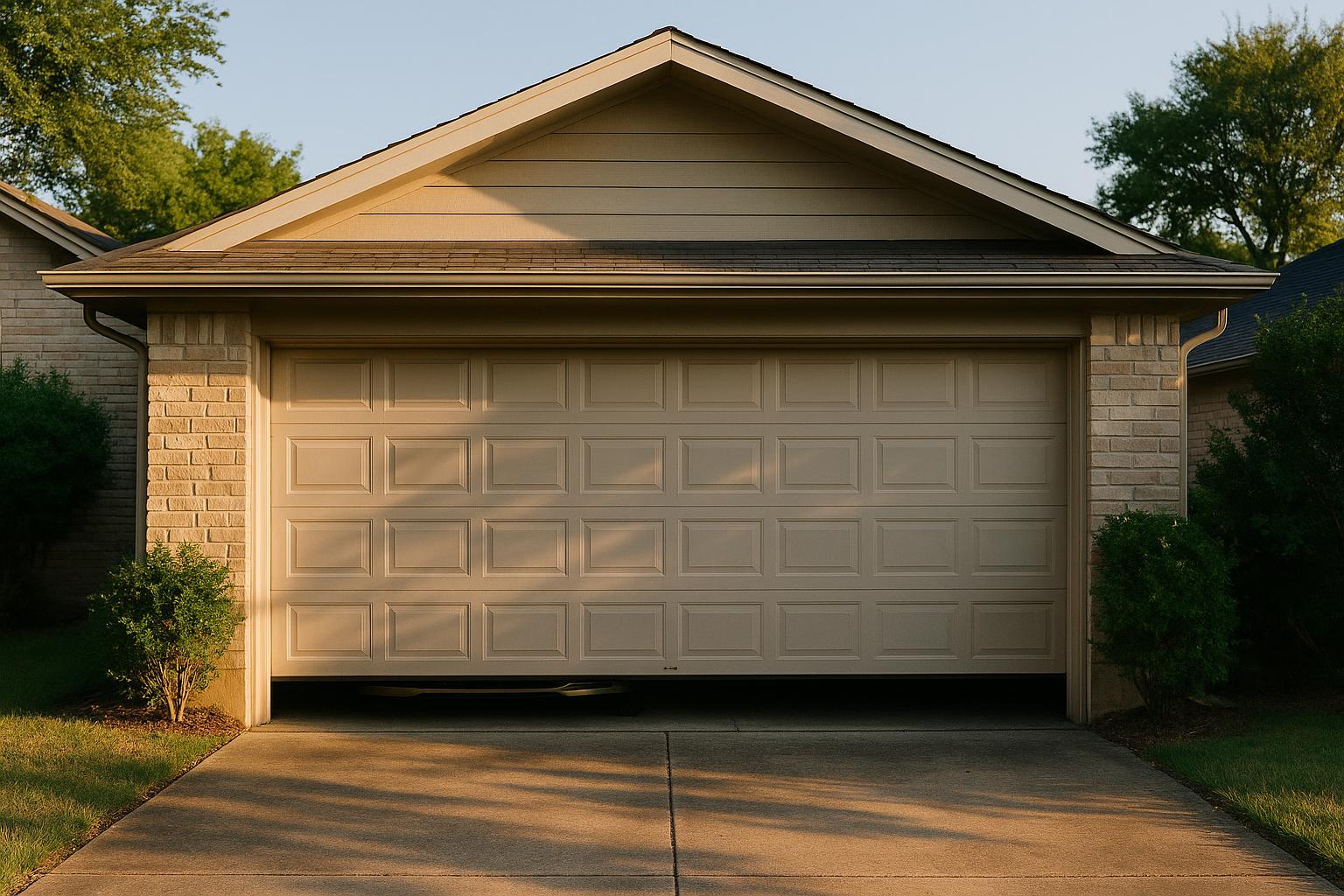
You're Running Late — and Your Garage Door Won't Budge
It's 7:15 on a Monday morning. You've got your coffee, your keys, and exactly enough time to make it to work without speeding. You press the button on your garage door opener and… nothing. Or maybe it groans, shudders, and gives up halfway. Either way, you're not going anywhere.
If you live in Grapevine, you know morning commutes are already a challenge without your garage door adding to the stress. Before you panic or start yanking on things, let's walk through the most common reasons a garage door refuses to open — and what you can actually do about each one.
1. Dead Batteries in the Remote
It sounds almost too simple, but this is the number one reason people think their garage door is broken. Remote batteries don't announce their retirement — they just quietly stop working.
What to do: Try the wall-mounted button inside your garage. If the door opens from the wall switch but not the remote, swap in fresh batteries. Most remotes use standard CR2032 coin batteries or AAA batteries, depending on the model.
2. The Opener Is Unplugged or Lost Power
Power outages overnight, a tripped breaker, or even a cord that got accidentally bumped can leave your garage door opener without electricity. This is especially common after the storms that roll through the Grapevine and Southlake area during spring and summer.
What to do: Check that the opener unit is plugged in. Then check your electrical panel for a tripped breaker. If the outlet itself is dead, try plugging something else into it to confirm. A GFCI outlet in the garage may have tripped and just needs to be reset by pressing the small button on the outlet face.
3. The Door Is Locked — Manually
Many garage doors have a manual lock built into the handle or a slide bolt on the inside track. If someone in your household engaged the manual lock, the opener motor will strain against a door that physically cannot move.
What to do: Look at the inside of your garage door for a horizontal bar or latch that slides into the track. Disengage it and try the opener again. If the motor was straining against the lock, listen for any unusual sounds on the next few cycles to make sure nothing was damaged.
4. Broken Torsion Springs
This is the big one. Torsion springs are mounted above your garage door and do the heavy lifting — literally. When a spring breaks, the opener motor doesn't have nearly enough power to lift the door on its own. You might hear the motor running, but the door barely moves or doesn't move at all.
How to tell: Look at the springs above your door. A broken spring will have a visible gap in the coil, usually near the center. You may have also heard a loud bang from the garage — that's the sound of a spring snapping under tension.
What to do: Do not attempt to replace garage door springs yourself. These are under extreme tension and can cause serious injury. This is a job for a trained technician. If you're in Grapevine, Colleyville, or any of the surrounding communities, give us a call and we can usually get to you the same day.
5. Misaligned or Blocked Safety Sensors
Every modern garage door opener has two small sensors near the bottom of the door tracks, one on each side. These photo-eye sensors prevent the door from closing on a person, pet, or object. But they can also prevent the door from operating correctly if they're misaligned, dirty, or blocked.
What to do: Check that both sensor lights are lit — typically one is green and one is amber. If one is blinking or off, make sure nothing is blocking the beam between them. Wipe the lenses with a soft cloth. Gently adjust the sensor that's blinking until the light becomes steady. Cobwebs, dust, and even direct morning sunlight can interfere with these sensors.
6. The Disconnect Switch Was Engaged
Your garage door opener has an emergency release cord — usually a red handle hanging from the track mechanism. If this was pulled (maybe during a previous power outage or by a curious kid), the door is disconnected from the opener chain or belt. The motor will run, but the door won't move with it.
What to do: Manually move the door to the fully closed position. Then pull the emergency release handle toward the opener unit (not down and away from it). This should re-engage the trolley. Cycle the opener once to confirm the door is connected and moving properly.
7. Worn Gears Inside the Opener
If your opener motor hums or runs but the door doesn't move — and the emergency release isn't the issue — you may have stripped gears inside the opener unit. This is common in older openers, especially chain-drive models that have been in service for 10 to 15 years.
What to do: This requires opening up the motor housing and replacing the gear and sprocket assembly. While the parts aren't expensive, the repair involves working with the motor and drive mechanism, so most homeowners prefer to have a professional handle it. In some cases, if the opener is old enough, it makes more sense to replace the entire unit with a newer, quieter model.
8. The Track Is Obstructed or Damaged
Garage door tracks guide the rollers as the door opens and closes. A bent track, a loose bracket, or even a small object caught in the track can stop the door from moving. In the heat of a Texas summer, metal tracks can also expand slightly and cause binding.
What to do: Visually inspect both tracks from top to bottom. Look for obvious bends, gaps between the track and the wall, or debris caught in the path. Minor obstructions can be cleared carefully, but a bent or misaligned track should be repaired by a professional to avoid further damage to the door or rollers.
When to Call a Professional
Some of these issues — dead batteries, tripped breakers, dirty sensors — are easy fixes any homeowner can handle. Others, like broken springs, stripped gears, or damaged tracks, require tools, training, and experience to repair safely.
Here's a good rule of thumb: if the fix involves anything under tension, anything electrical beyond resetting a breaker, or anything that requires disassembling the opener or door hardware, call a pro.
At Grapevine Door & Opener, we've helped homeowners across Grapevine, Bedford, Euless, Hurst, and the surrounding area get unstuck — often the same day they call. We know that a garage door that won't open isn't just an inconvenience; it can throw off your entire day.
Prevent Tomorrow Morning's Problem Today
The best way to avoid a surprise garage door failure is regular preventive maintenance. A quick annual inspection can catch worn springs before they snap, identify sensor issues before they strand you, and keep your opener running smoothly for years longer than it would otherwise.
If your garage door gave you trouble this morning — or if it's been making you nervous lately — don't wait for it to fail completely. Reach out to us for an honest assessment. We're your neighbors, and we'll treat your home the way we'd treat our own.