
That Frustrating Reverse: What's Going On?
You press the button on your garage door remote, the door starts its descent, and then — right before it reaches the floor — it reverses and goes back up. You try again. Same thing. Maybe it works on the third try, maybe it doesn't. Either way, you're standing in your driveway in Grapevine wondering what just happened.
This is one of the most common garage door complaints we hear from homeowners, and the good news is that it's usually caused by something identifiable and fixable. The bad news? Ignoring it can lead to bigger problems down the road, including a door that stops working entirely or, worse, a safety hazard for your family.
Let's walk through the most likely reasons your garage door reverses before closing completely and what you can do about each one.
1. Misaligned or Dirty Safety Sensors
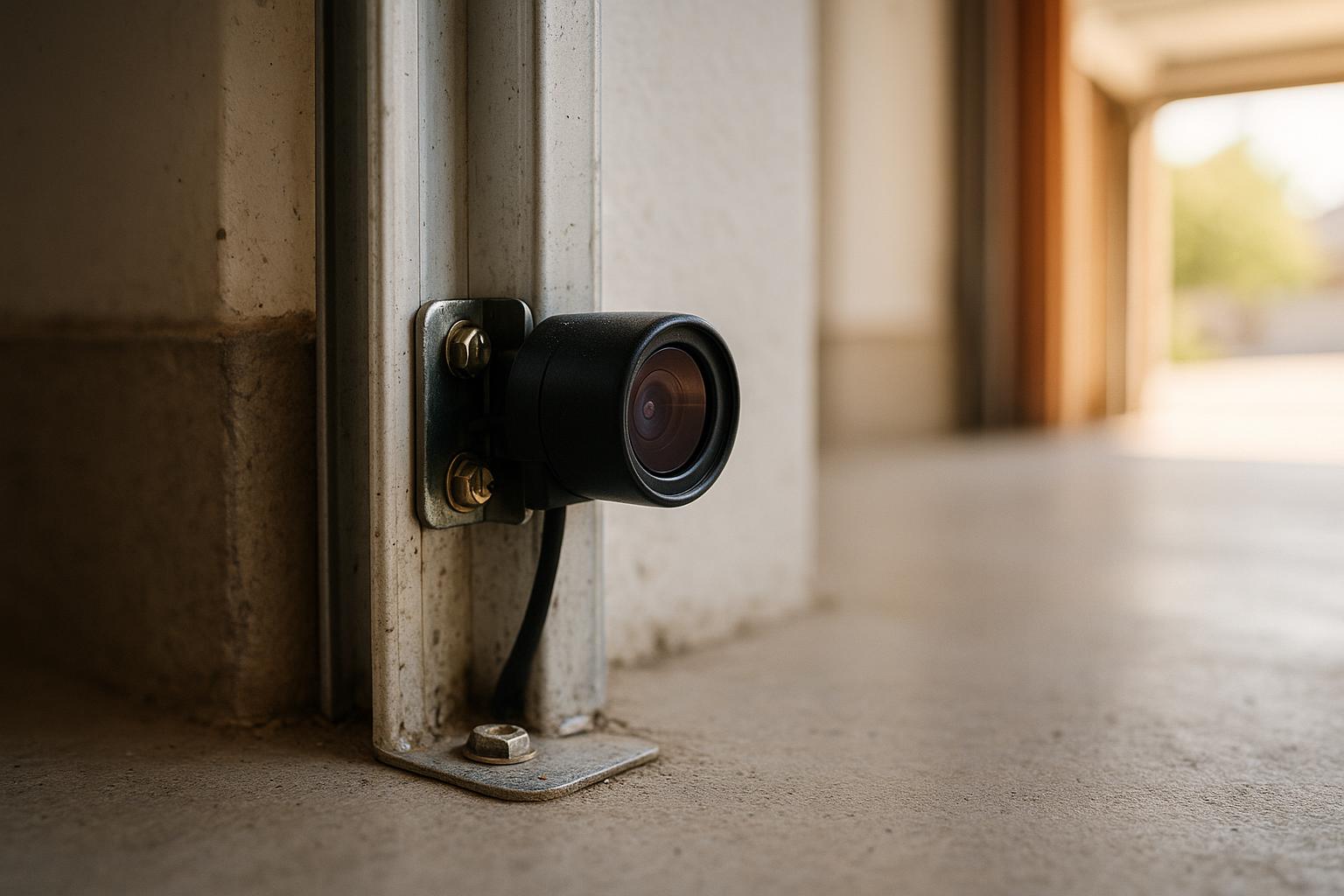
This is the number one cause of a garage door that reverses before reaching the floor. Every garage door opener manufactured after 1993 is required to have photo-eye safety sensors mounted near the bottom of the door tracks on either side. These sensors send an invisible beam across the opening. If something breaks that beam — a child, a pet, a trash can — the door reverses to prevent injury or damage.
The problem is that these sensors can become misaligned over time. A bump from a bicycle, a lawn mower vibration, or even settling of the garage floor can knock them out of alignment. When they can't "see" each other, the opener interprets it the same way it would an obstruction: it reverses the door.
What to check:
- Alignment: Both sensors should have a steady light (usually green on one side and amber on the other). If one is blinking, it's likely out of alignment. Gently adjust the sensor until the light becomes steady.
- Cleanliness: Dust, cobwebs, and even pollen — which we get plenty of here in North Texas — can block the sensor lens. Wipe both lenses with a soft cloth.
- Wiring: Check that the wires running to each sensor are intact and securely connected. Loose or frayed wires can cause intermittent issues.
2. The Close-Limit Switch Needs Adjustment
Your garage door opener has settings called limit switches that tell the motor how far the door should travel in both the open and close directions. If the close-limit switch is set incorrectly, the opener may think the door has hit an obstruction when it's actually just reaching the floor. The opener's safety mechanism kicks in, and the door reverses.
This is especially common after a new opener installation or if someone has recently adjusted the settings. On most openers, the limit adjustment is a small screw or dial on the back or side of the motor unit. Consult your owner's manual for specific instructions, or give us a call if you're not comfortable making the adjustment yourself.
3. Worn or Broken Garage Door Springs
Your garage door springs do the heavy lifting — literally. They counterbalance the weight of the door so the opener motor doesn't have to work as hard. When springs wear out or break, the door becomes significantly heavier. The opener strains to move it, and the built-in force sensor may detect too much resistance and reverse the door as a safety precaution.
If you suspect a spring issue, do not attempt to repair or replace springs yourself. Garage door springs are under extreme tension and can cause serious injury if handled improperly. This is a job for a trained technician. At Grapevine Door & Opener, spring replacement is one of our most frequently performed services, and we keep the most common spring sizes on our trucks so we can usually complete the repair in a single visit.
4. Track Problems
The metal tracks that guide your garage door up and down need to be properly aligned and free of obstructions. Over time, tracks can become bent, dented, or misaligned. Debris like small rocks, leaves, or even hardened grease can create enough resistance to trigger the opener's auto-reverse feature.
What to look for:
- Visible bends or dents in the track
- Gaps between the track and the rollers
- Debris or buildup inside the track channel
- Loose mounting brackets that allow the track to shift
Minor debris can be cleared with a cloth, but bent tracks or loose brackets should be addressed by a professional to avoid causing further damage to the door or the opener.
5. Opener Force Settings Are Too Low
In addition to limit switches, most garage door openers have force settings that control how much effort the motor applies when opening and closing the door. If the downward force is set too low, the opener may not have enough power to push the door all the way to the floor, interpreting the normal resistance of the weatherstripping or the door's weight as an obstruction.
You can usually adjust the force setting with a small screwdriver on the opener unit. Increase the down-force setting in small increments and test the door after each adjustment. Be careful not to set it too high, though — the force setting exists to protect people and objects from being crushed by the door.
6. Damaged or Worn Rollers
Garage door rollers allow the door to glide smoothly along the tracks. When rollers crack, chip, or seize up, they create friction and resistance. This added resistance can fool the opener into thinking something is blocking the door's path. Nylon rollers tend to last longer than steel ones, but all rollers wear out eventually — typically every five to seven years depending on usage.
Replacing rollers is a relatively affordable maintenance item that can prevent bigger headaches. If you hear grinding or squealing when your door operates, worn rollers are a likely culprit.
When to Call a Professional
Some of these issues — cleaning sensors, checking for debris in the tracks — are safe for most homeowners to handle. Others, like spring replacement, track realignment, and opener adjustments, are best left to experienced technicians who work with these systems every day.
Here are some signs it's time to pick up the phone:
- The door reverses every single time, regardless of what you've tried
- You hear loud banging, popping, or grinding sounds
- The door hangs unevenly or appears crooked
- You notice a broken spring (a visible gap in the coil above the door)
- The opener motor runs but the door doesn't move
If you're in Grapevine, Colleyville, Southlake, or any of the surrounding communities, Grapevine Door & Opener is here to help. We diagnose the problem honestly, explain your options clearly, and get your door working safely again — usually the same day you call.
Prevention Is the Best Fix
Many of these issues can be caught early with routine preventive maintenance. A quick annual inspection of your springs, rollers, tracks, sensors, and opener settings can save you from unexpected breakdowns and costly emergency repairs. Think of it like an oil change for your garage door — a small investment that extends the life of the entire system.
If your garage door has been acting up or it's been a while since anyone took a close look at it, reach out to us. We'll make sure everything is operating the way it should so you can get back to the things that matter.